Fertility Wizard

(Go to the Fertility Wizard.)

(Go to gleeson.us.)

(E-mail sean@gleeson.us.)

About the Fertility Wizard


Who made the Fertility Wizard?

I did. I'm Sean Gleeson, a designer living in Oklahoma City, Oklahoma.

Why did you make it?

My wife asked me to. She wanted a simple web page that would keep track of her fertility. I made it for her, but anyone who wants to use it is welcome. It's free.

How do I use it?

Just tell the wizard when your most recent (or current) period started. It will tell you what day of your cycle you're on, and whether you're fertile that day.

You can visit the site every day (you may wish to bookmark it) and it will remember you, because it saves a "cookie" to your computer. So you don't have to input your start date every time, just once a month.

When your period starts again, reset your cycle with the "reset" button.

How does it know if I'm fertile?

The wizard doesn't really do anything you couldn't do with a pencil and a calendar. It counts the days since your menstrual cycle started. If you are on day 8 through day 19 of your cycle, it says you're fertile. If you're on any other day, it says you're infertile.

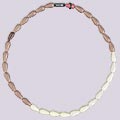
Cycle Beads

(Go to the IRH website.)

Is there some way I could keep track of my fertility using the same method, but instead of a free web page, I'd buy a necklace with a tiny rubber band that I'd have to remember to advance to the next bead every day?

In fact, I believe there is such a necklace on offer through the Institute for Reproductive Health at Georgetown University. I am not affiliated in any way with the IRH; I get no money or compensation from them. But since their necklace was what inspired my wife to ask me to make the Fertility Wizard, I'm happy to link to their site. It's a lot more informative than this one, but not as pretty.

Is this method accurate?

I'm told this method is 95% accurate. That means, if 100 women use it for a year, engaging in the procreative act only on the "infertile" days, five lucky ones will still get pregnant. If you're interested, there are far more accurate ways of gauging your fertility than simply counting days, but they involve taking your temperature and analyzing your mucus and whatnot.

Is it for everyone?

Nope. It works for women whose menstrual cycles are between 26 and 32 days long. Most women fit this description, but some don't.

Is it guaranteed in any way?

Absolutely not! While I hope you find this information useful, I assume no responsibilty for any results. Unless you're my wife, in which case I'll assume some responsibility.